
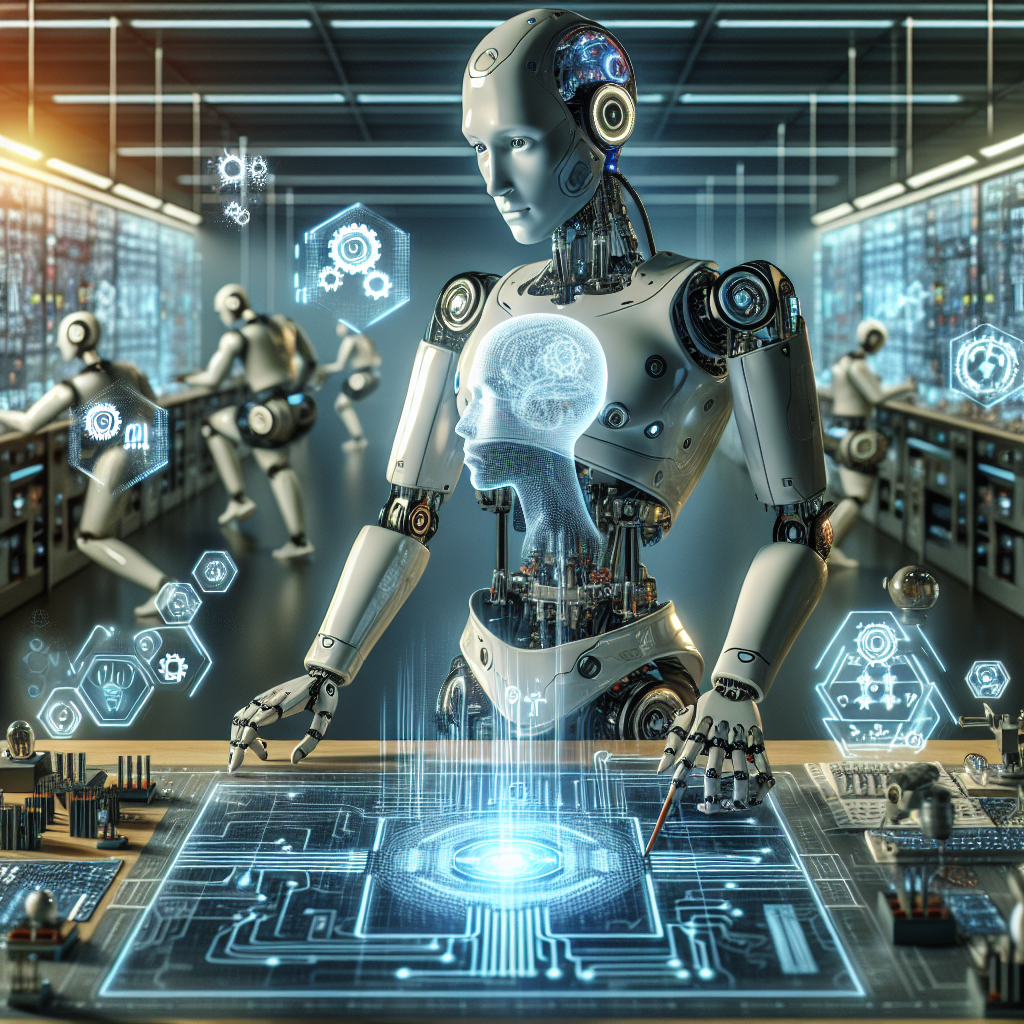
AI in Robotics: Groundbreaking Innovations on the Horizon for 2025
The intersection of artificial intelligence (AI) and robotics is paving the way for remarkable advancements. As we look towards 2025, several groundbreaking innovations are on the horizon that promise to revolutionize various industries and transform everyday life.
AI and Robotics: Current Landscape
The application of AI in robotics has evolved significantly over the last decade. Today, robots are becoming increasingly intelligent, capable of complex tasks ranging from autonomous driving to precision surgery. These innovations are largely driven by advancements in machine learning, computer vision, and natural language processing.
Innovations Expected in 2025
As we approach 2025, various AI-driven innovations in robotics are predicted to emerge. Below are some key areas of development:
1. Autonomous Mobile Robots (AMRs)
AMRs are expected to become more sophisticated in navigation and decision-making. By leveraging enhanced AI algorithms, they will be able to operate in unpredictable environments, making them ideal for warehouses, hospitals, and urban settings.
2. Collaborative Robots (Cobots)
Cobots are designed to work alongside humans. They will become increasingly intuitive, learning from human behavior, which will optimize workflows in manufacturing and service sectors.
3. AI-Enhanced Drones
Drone technology is expected to see significant improvements in 2025, particularly with AI integration. Enhanced data processing capabilities will allow drones to execute complex tasks such as search and rescue missions and detailed agricultural monitoring.
4. Healthcare Robotics
Robots that assist with elderly care and surgical procedures will continue to advance, equipped with AI to predict patient needs and enhance surgical precision.
Comparison Table: Traditional vs. AI-Enhanced Robots
| Feature | Traditional Robots | AI-Enhanced Robots |
|---|---|---|
| Programming | Pre-configured tasks | Adaptive learning from environment |
| Flexibility | Limited task execution | Dynamic task adjustment |
| Cost | Generally lower initial investment | Higher upfront cost but increased ROI over time |
| Use Cases | Fixed environments | Varied, unpredictable environments |
Key Takeaways
- AI is revolutionizing robotics by enabling greater autonomy and adaptability.
- Innovations such as AMRs and Cobots are set to transform industries.
- AI-Enhanced robots have a higher upfront cost but can provide greater long-term value.
Pros & Cons
Pros:
- Improved efficiency and productivity
- Enhanced safety in hazardous environments
- Greater adaptability in various sectors
Cons:
- High initial investment costs
- Potential job displacement concerns
- Technical complexities requiring specialized knowledge
Use Cases for AI in Robotics
Various sectors can leverage AI-driven robotics effectively. Here are some practical examples:
1. Logistics and Warehousing
Companies like Amazon utilize AI-enhanced robots for sorting, packing, and delivery, showcasing improved efficiency over traditional systems.
2. Agriculture
Farmers are adopting drones equipped with AI for crop monitoring and yield prediction, optimizing resource allocation and enhancing productivity.
3. Manufacturing
AI-driven Cobots are being used in assembly lines to perform repetitive tasks alongside human workers, increasing throughput and reducing errors.
4. Healthcare
Robots like the da Vinci Surgical System are utilizing AI to assist surgeons, leading to reduced recovery times and higher precision.
Step-by-Step: Implementing AI in Industrial Robotics
- Assess Needs: Identify the specific tasks that require robotic automation.
- Research Robotics Solutions: Evaluate different AI-enhanced robots that suit your needs and budget.
- Integration Planning: Plan how the new robots will integrate into existing workflows.
- Develop Training Programs: Create training programs for staff to work with new robotics solutions safely and effectively.
- Deploy and Monitor: Implement the robots in a controlled environment, monitoring performance and making necessary adjustments.
Conclusion
As we step into 2025, the integration of AI in robotics will usher in remarkable innovations that can redefine industries and enhance our daily lives. While challenges remain, the opportunities presented by intelligent robotics will likely lead to unprecedented advancements.
FAQs
1. What are Autonomous Mobile Robots (AMRs)?
AMRs are robots that can navigate and operate independently in varied environments, often equipped with advanced sensors and AI systems.
2. How do Cobots differ from traditional robots?
Cobots are designed to work collaboratively with humans, adapting to their movements and tasks, whereas traditional robots generally operate independently.
3. Are AI-enhanced robots worth the investment?
While they often require higher initial costs, the potential for increased efficiency and ROI can make them worthwhile in the long run.
4. How can robots improve safety in hazardous environments?
AI robots can perform dangerous tasks, reducing human exposure to risks such as heavy machinery, toxic substances, or extreme temperatures.
5. What industries are expected to benefit the most from AI in robotics?
Industries such as logistics, agriculture, healthcare, and manufacturing are expected to see the most significant benefits through increased efficiency and automation.
To discuss these exciting developments in AI and robotics further, join the conversation on the FileDevice Forum.
