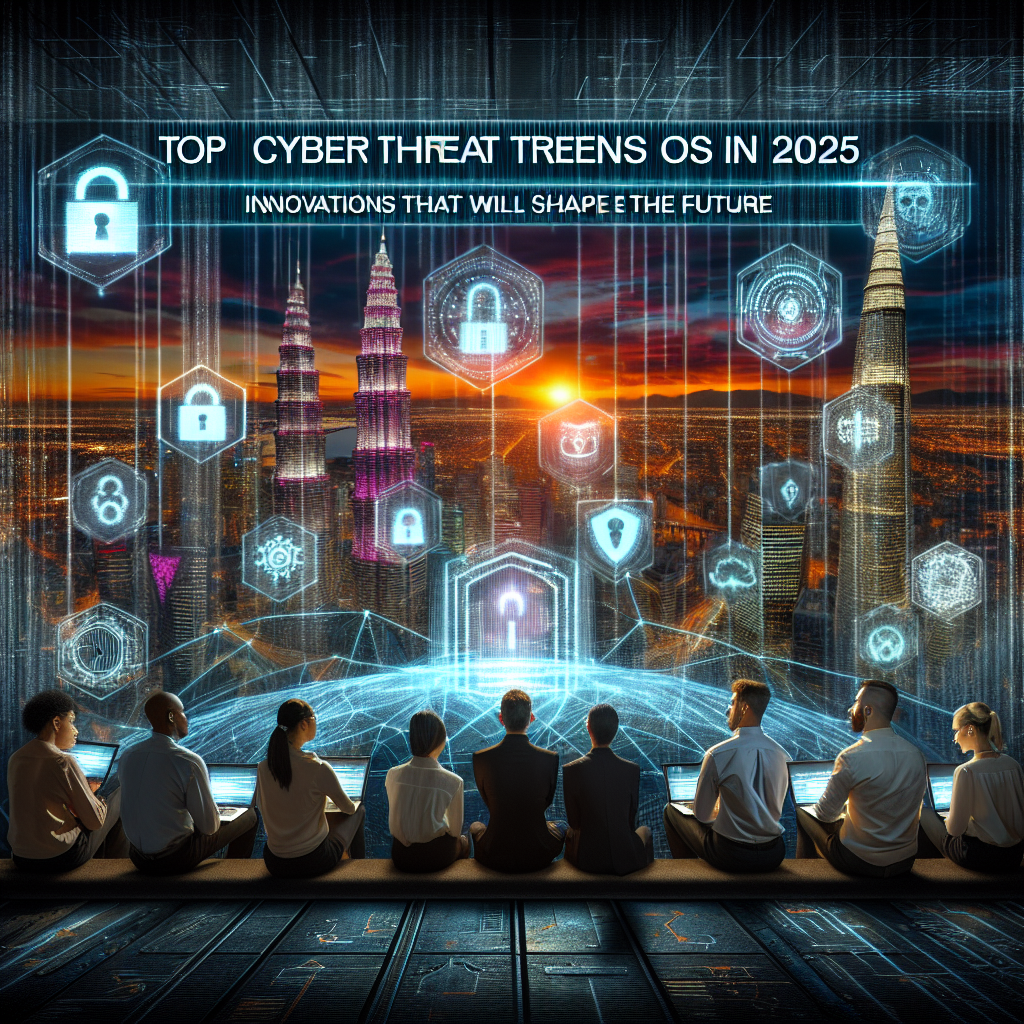
Top Cyber Threat Trends to Watch in 2025: Innovations That Will Shape the Future
The landscape of cybersecurity is constantly evolving, with new threats and innovations emerging every year. As we approach 2025, it’s crucial for businesses and individuals alike to stay informed about the most significant cyber threat trends and technologies that will redefine security. This article explores these trends, providing insights into what to expect in the coming years.
Top Cyber Threat Trends in 2025
1. Artificial Intelligence and Machine Learning Attacks
Cybercriminals are increasingly using Artificial Intelligence (AI) and Machine Learning (ML) to enhance their attacks. These technologies enable hackers to analyze vast quantities of data, predict vulnerabilities, and automate attacks with high precision.
- Automated spear phishing campaigns.
- Dynamic malware that modifies itself based on environment.
2. Increased Ransomware Sophistication
Ransomware attacks will continue to escalate, moving towards double extortion tactics where attackers not only encrypt data but also threaten to publish sensitive information if their demands are not met.
- Targeting critical infrastructure.
- Using ransomware-as-a-service for easy access.
3. IoT Vulnerabilities
The proliferation of Internet of Things (IoT) devices creates new attack vectors. As these devices are often less secure than traditional endpoints, they present a treasure trove for cybercriminals.
- Smart home devices can be hacked for surveillance.
- Healthcare devices can be manipulated to harm patients.
4. Supply Chain Attacks
Supply chain attacks allow hackers to compromise a target organization by infiltrating a third-party vendor. This tactic has gained prominence and is expected to continue being a significant threat in 2025.
- Exploiting software updates as a vector.
- Utilizing trusted relationships for unauthorized access.
5. Cloud Security Threats
As businesses increasingly move to cloud-based services, the security of these platforms becomes paramount. Misconfigured cloud settings can expose sensitive data to cybercriminals.
- Data breaches due to improper access controls.
- Account hijacking leading to data theft.
Comparative Analysis of Cyber Threats and Innovations
| Threat Type | Emerging Innovations | Potential Impact |
|---|---|---|
| AI and ML Attacks | Automated defensive algorithms | High – Can lead to widespread data compromise |
| Ransomware | AI-enhanced detection and response | Very High – Critical disruption to services |
| IoT Vulnerabilities | Improved IoT security protocols | Medium – Risks to personal and organizational safety |
| Supply Chain Attacks | Vendor risk assessment tools | High – Can affect multiple organizations |
| Cloud Security Threats | Zero Trust architecture | High – Significant data loss if compromised |
Key Takeaways
- AI and ML are being used by both attackers and defenders.
- Ransomware tactics are evolving with double extortion becoming common.
- The increase in IoT devices poses a severe risk if not adequately managed.
- Supply chain attacks highlight the importance of third-party vendor risk assessment.
- Cloud security must adapt to prevent data breaches due to configuration errors.
Pros & Cons
Pros
- Innovations in cybersecurity lead to more effective defenses.
- Rising awareness of threats prompts better security practices.
- New regulations can enhance overall security posture.
Cons
- The cost of advanced security solutions can be prohibitive.
- Rapid technological changes can outpace organizations’ ability to adapt.
- The skills gap in cybersecurity talent remains a significant challenge.
Use Cases
1. AI-Powered Threat Detection
Organizations are using AI algorithms to identify anomalies in their network traffic, improving incident response times. For example, a financial institution might implement a machine learning model to analyze transaction patterns, quickly flagging fraudulent activities.
2. Implementing Zero Trust Architecture
A technology company may adopt a Zero Trust approach, ensuring that no user, inside or outside the organization, is trusted by default. Every access request undergoes strict verification, greatly reducing the chance of internal and external breaches.
How to Set Up Effective Cybersecurity Measures
Step-by-Step Guide
- Assess Current Security Posture: Evaluate existing security measures and identify vulnerabilities.
- Invest in AI-Driven Security Solutions: Choose tools that incorporate AI for better threat detection.
- Implement Zero Trust Architecture: Restrict access based on user roles, requiring authentication for every access attempt.
- Regularly Train Employees: Conduct ongoing training to foster a culture of security awareness.
- Monitor and Update Continuously: Regularly review and update security protocols to respond to new threats.
Conclusion
As we move closer to 2025, understanding the evolving landscape of cyber threats is crucial for individuals and organizations alike. By being aware of these trends and implementing effective countermeasures, we can better safeguard our data and infrastructure against increasingly sophisticated attacks.
FAQs
What is AI’s role in cyberattacks?
AI enables cybercriminals to carry out sophisticated attacks that can adapt to security measures in real-time, enhancing their effectiveness.
How can organizations defend against ransomware?
Organizations should implement regular data backups, maintain software updates, and conduct employee training on recognizing phishing attempts.
What is a supply chain attack?
A supply chain attack involves infiltrating a third-party vendor to compromise a target organization, often exploiting trusted relationships.
Why is IoT security essential?
IoT devices often lack robust security measures, making them susceptible to attacks that can lead to severe risks, including data breaches and physical harm.
What is a Zero Trust architecture?
Zero Trust architecture is a security model that requires verification from everyone trying to access resources within a network, minimizing assumptions of trust.
