
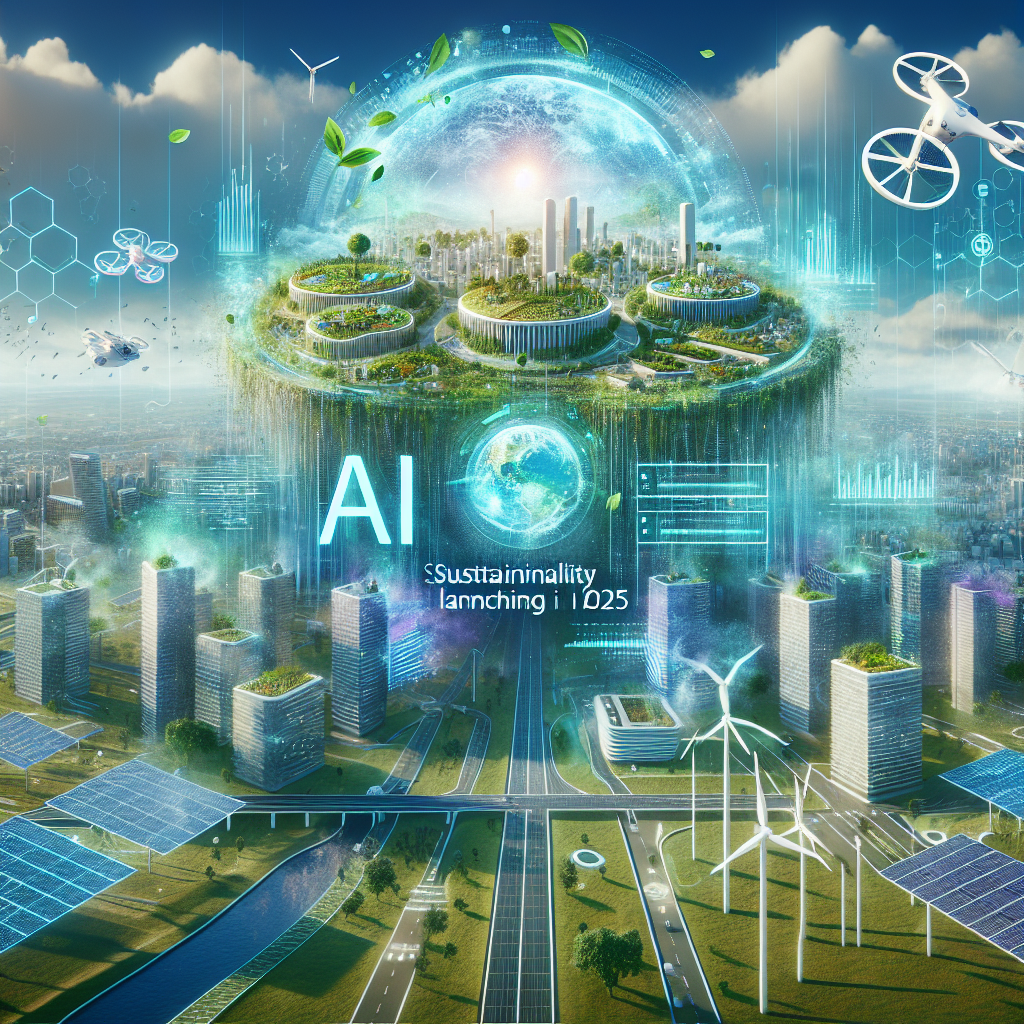
AI and Sustainability: Innovative Solutions Launching in 2025
As we move toward 2025, innovative artificial intelligence (AI) solutions are emerging that promise to enhance sustainability efforts across various sectors. This article will explore several game-changing AI applications that play a crucial role in promoting sustainable practices, encouraging efficiency, and driving environmental stewardship.
AI in Agriculture
AI is transforming agriculture by enhancing crop yield, reducing waste, and optimizing resource usage. Here are some ways AI is integrated into sustainable farming:
- Precision Farming: Implements data-driven insights to increase efficiency in resource usage, from water to fertilizers.
- Pest Management: Uses machine learning models to predict pest outbreaks and target interventions, reducing pesticide use.
- Crop Monitoring: Employs drones and sensors equipped with AI algorithms to monitor plant health in real-time.
Example: Smart Farm Solutions
Companies like Sensorica are using IoT devices combined with AI algorithms to monitor and improve crop health. In a benchmark study, their systems increased overall yield by 20% while reducing water usage by 30%.
AI in Energy Management
The energy sector is increasingly reliant on AI technologies for maximizing efficiency and integrating renewable energy sources. Key innovations include:
- Smart Grids: AI can analyze energy demand patterns and enable dynamic energy distribution.
- Predictive Maintenance: AI models can anticipate equipment failures, reducing downtime and maintenance costs.
- Energy Storage Solutions: AI helps optimize battery usage and management for renewable energy sources.
Example: Neural Networks in Energy Forecasting
Neural networks are being applied by various energy companies to predict electricity demand. These forecasts can reduce energy waste by up to 15% during peak usage times.
AI in Waste Management
AI technologies are enhancing waste management by improving recycling processes and reducing landfill waste. Innovations encompass:
- Smart Sorting: AI-powered robots can identify and sort recyclable materials more efficiently than humans.
- Waste Tracking: Machine learning algorithms are used to monitor waste patterns and delineate better collection strategies.
- Upcycling Initiatives: AI can assist in designing products that are easier to recycle, thus promoting a circular economy.
Example: RecycleBot
A company developed an AI-based RecycleBot that can sort materials with 95% accuracy. In pilot programs, it increased recycling rates by 40% over traditional methods.
Comparison Table: AI Applications in Sustainability
| Sector | AI Application | Benefits |
|---|---|---|
| Agriculture | Precision Farming | Increased yields, reduced resource waste |
| Energy | Smart Grids | Optimized energy distribution |
| Waste Management | Smart Sorting | Higher recycling accuracy |
Pros & Cons of AI in Sustainability
Pros
- Increased efficiency in resource allocation.
- Enhanced decision-making through data analysis.
- Potential cost savings in operations.
Cons
- High initial investment costs for implementation.
- Potential job displacement due to automation.
- Data privacy concerns with monitoring technologies.
Use Cases
1. Smart Aquaculture
AI can maintain optimal conditions in fish farming environments through real-time monitoring, leading to sustainable practices and better yield rates.
2. Climate Change Modeling
Machine learning algorithms can predict climate events, helping governments and organizations prepare and mitigate risks more effectively.
3. Urban Planning
AI technologies can model traffic patterns or energy consumption in smart cities, allowing better resource management and sustainable development.
Implementation Steps for AI Solutions
Incorporating AI into sustainability practices involves several steps:
- Identify the Problem: Pinpoint the sustainability issue that requires AI intervention.
- Collect Data: Gather relevant data for training AI models.
- Select AI Technologies: Choose suitable AI tools and frameworks based on your requirements.
- Develop the Model: Create algorithms that address your specific sustainability challenge.
- Test and Evaluate: Pilot the AI solution and analyze performance metrics.
- Deploy and Monitor: Implement the solution at scale, continuously monitoring its effectiveness.
Conclusion
As we move closer to 2025, AI stands as a pivotal force in advancing sustainability initiatives. With applications spanning agriculture, energy, and waste management, the potential for innovation is boundless. By leveraging AI, we can optimize resource use, reduce waste, and foster a more sustainable future.
FAQs
What industries can benefit from AI in sustainability?
Industries such as agriculture, energy, waste management, and urban planning are among the leaders in utilizing AI for sustainable practices.
How does AI contribute to renewable energy?
AI optimizes energy consumption, forecasts energy demand, and enhances the efficiency of renewable energy technologies.
Are there any risks associated with using AI in sustainability?
While AI offers many benefits, it poses risks like job displacement and data privacy concerns that must be cautiously managed.
What is the essence of smart farming?
Smart farming uses AI to monitor and optimize agricultural practices, improving crop yield while minimizing resource wastage.
How can organizations start implementing AI for sustainability?
Organizations should conduct a needs assessment, gather data, and select appropriate AI technologies before launching pilot projects.
Join the conversation about AI and sustainability by visiting the FileDevice Forum and sharing your insights and inquiries.
