
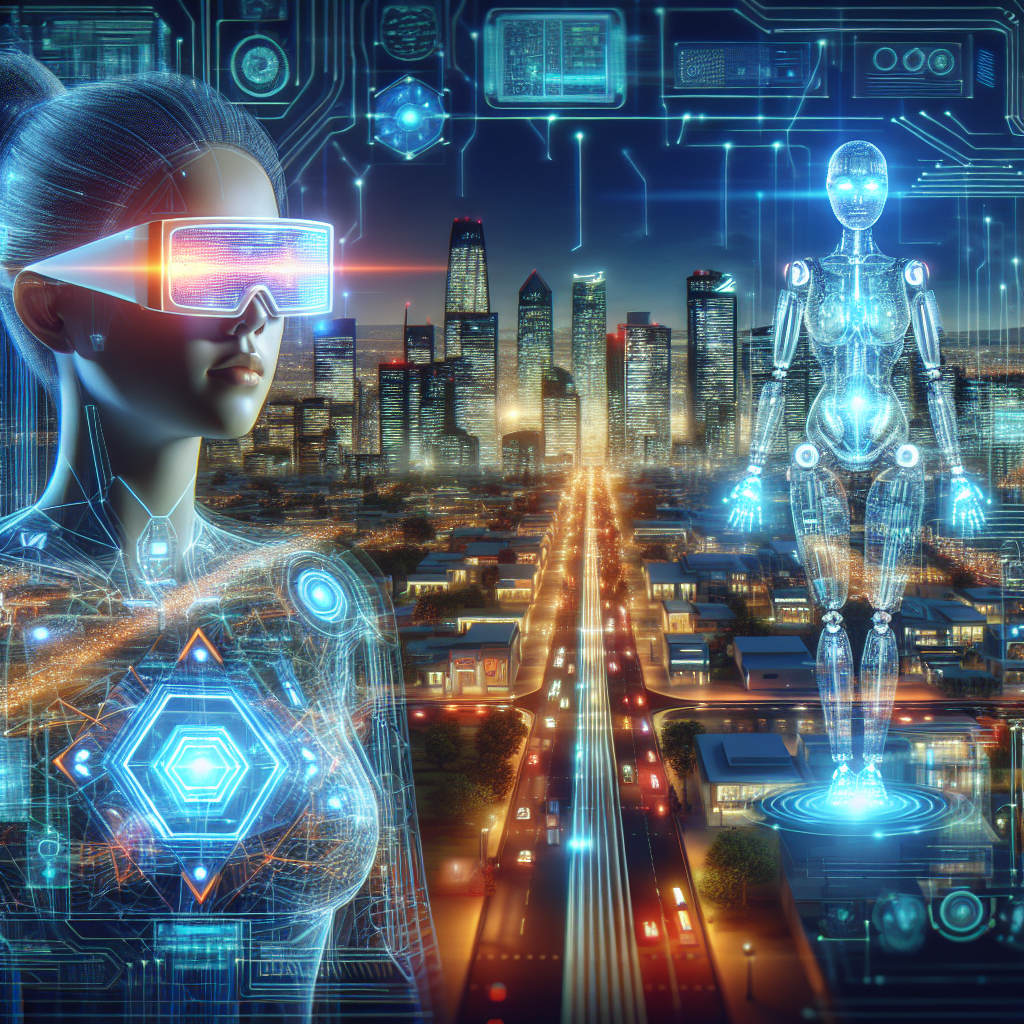
Augmented Reality Meets AI: Innovations to Watch in 2025
As technology rapidly evolves, the intersection of Augmented Reality (AR) and Artificial Intelligence (AI) is creating unprecedented innovations. By 2025, we can expect AR and AI to come together in ways that will transform industries, enhance user experiences, and redefine how we interact with digital content.
Understanding Augmented Reality and Artificial Intelligence
Augmented Reality overlays digital information onto the real world, creating an immersive experience. Meanwhile, Artificial Intelligence enables machines to emulate human intelligence by learning and adapting to new information. Together, these technologies promise to revolutionize various sectors by providing enhanced, interactive, and contextually aware experiences.
Key Innovations to Anticipate in 2025
The following innovations showcase how AR and AI will merge to create transformative tools and applications:
- Smart Glasses: Practical devices that provide real-time data through AR interfaces while integrating AI for predictive analytics.
- Personalized Learning: Education platforms using AR for immersive learning and AI to tailor content to individual learning styles.
- Retail Experiences: Virtual try-ons using AR combined with AI to analyze customer preferences and provide personalized recommendations.
- Healthcare Solutions: AR-assisted surgeries integrated with AI for improved decision-making based on patient data.
Comparison of AR and AI Technologies
| Feature | Augmented Reality | Artificial Intelligence |
|---|---|---|
| User Interaction | Enhances physical reality | Imitates human reasoning |
| Data Usage | Real-time environment data | Historical and pattern data |
| Primary Applications | Gaming, Training, Retail | Data Analytics, Automation, Predictive Modeling |
| Technology Integration | Mobile Devices, Smart Glasses | Cloud Computing, Robotics |
Use Cases of AR and AI in 2025
1. Retail
Augmented reality apps allow customers to visualize products in their own space, while AI analyzes purchasing patterns for targeted marketing.
2. Education
Students can engage with complex subjects through AR simulations, and AI adapts educational content based on feedback and assessments.
3. Healthcare
Surgeons can use AR to visualize anatomical structures while AI helps analyze patient data in real-time for better surgical outcomes.
4. Automotive
AR head-up displays in vehicles can present navigation data directly in the driver’s field of view, with AI predicting traffic patterns and hazards.
5. Entertainment
AR gaming experiences enhanced by AI can offer dynamic, personalized adventures with evolving storylines based on player choices.
Step-by-Step: Implementing AR and AI in Business
Businesses wishing to integrate AR and AI can follow these steps:
- Identify the Use Case: Determine how AR and AI can benefit your business, such as improving customer service or boosting sales.
- Select the Right Technology: Choose platforms or SDKs that support both AR and AI functionalities.
- Develop a Prototype: Create a proof-of-concept to test your business idea in a real-world scenario.
- Collect User Feedback: Gather insights from users to refine and enhance the application.
- Launch the Full Product: Roll out the application with adequate marketing and user onboarding support.
Pros & Cons of AR and AI Integration
Pros
- Enhanced user engagement and interactivity
- Improved data-driven decision-making
- Personalized experiences for end-users
- Increased efficiency and productivity in various sectors
Cons
- High initial development costs
- Potential privacy concerns with data collection
- Technical issues, including hardware compatibility
- Need for ongoing maintenance and updates
Key Takeaways
- The merger of AR and AI will create transformative innovations.
- Use cases range from retail to healthcare, improving efficiency and user experience.
- Implementing these technologies requires careful planning and prototyping.
- While promising, challenges such as cost and privacy must be considered.
Conclusion
In 2025, the synergy between Augmented Reality and Artificial Intelligence will lead to groundbreaking innovations that redefine user experiences across various sectors. Businesses and developers must stay tuned to these trends to leverage the full potential of these technologies.
FAQs
What is Augmented Reality?
Augmented Reality (AR) is a technology that overlays digital information, such as images or animations, onto the real world, enhancing the user’s perception of their environment.
How does AI enhance Augmented Reality?
Artificial Intelligence enhances AR by enabling real-time data analytics, personalized content delivery, and adaptive learning, making interactions more intelligent and relevant.
In what industries can we expect to see AR and AI integrations?
AR and AI integrations are anticipated in various industries, including retail, healthcare, education, automotive, and entertainment.
What are the challenges of implementing AR and AI?
Challenges include high development costs, privacy concerns, technical difficulties, and the need for ongoing maintenance and updates.
How can businesses start using AR and AI technologies?
Businesses can start by identifying relevant use cases, selecting the right technology, developing prototypes, gathering user feedback, and eventually launching their products.
Join the conversation and share your thoughts on the intersection of AR and AI. Discuss on the FileDevice Forum.
