
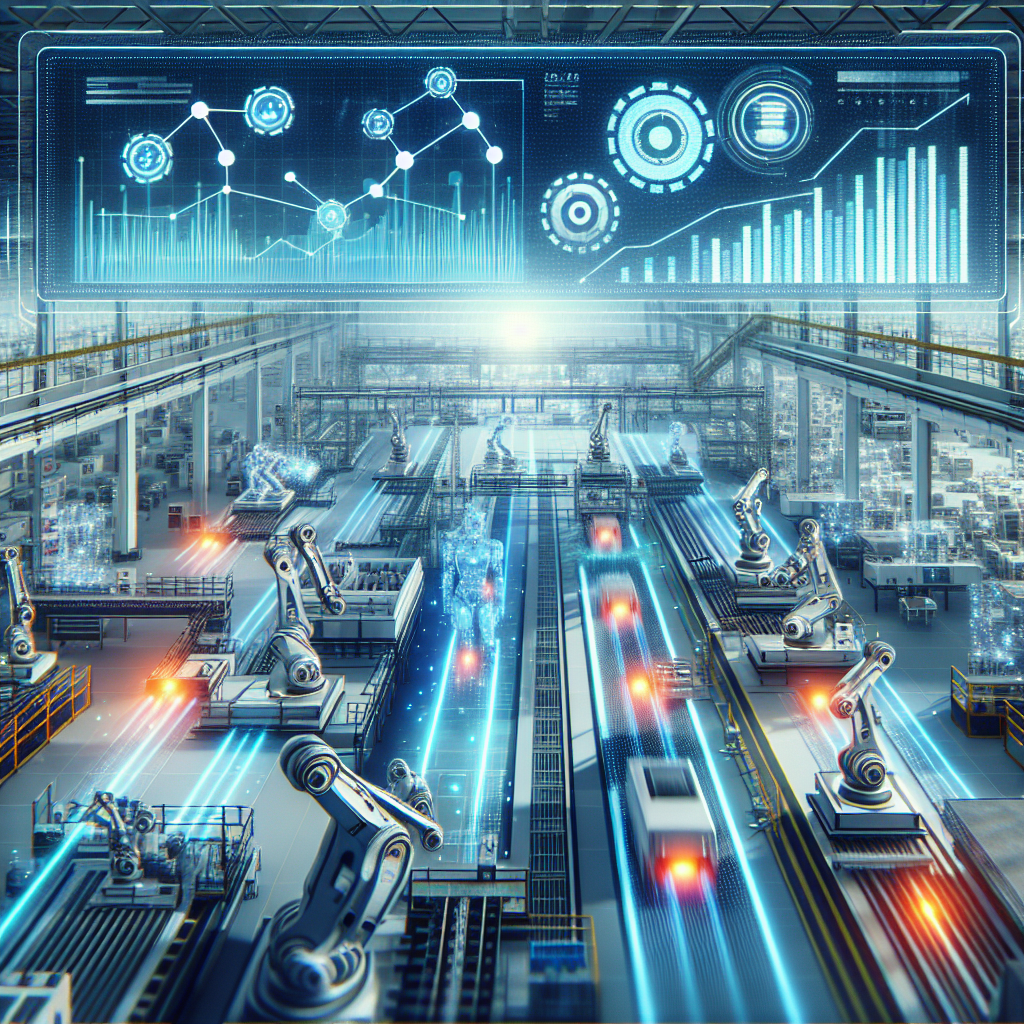
AI and Manufacturing: Key Developments Reshaping Industries by 2025
The manufacturing sector is witnessing a remarkable transformation driven by advancements in artificial intelligence (AI). As industries continue to evolve, AI technologies are reshaping production processes, optimizing supply chains, and enhancing product quality. By 2025, these developments are projected to redefine how manufacturers operate in an increasingly competitive landscape.
AI in Manufacturing: An Overview
AI plays a crucial role in modern manufacturing environments by automating processes, providing predictive insights, and facilitating real-time decision-making. Here’s a look at some key developments in AI that are set to reshape industries by 2025:
Key Developments
- Predictive Maintenance: AI algorithms can analyze equipment data to predict failures, reducing downtime and maintenance costs.
- Supply Chain Optimization: AI enhances visibility across supply chains, enabling better demand forecasting and inventory management.
- Quality Control: Machine learning models are used to detect defects in products during manufacturing, increasing overall quality.
- Robotics and Automation: Collaborative robots (cobots) equipped with AI are increasingly working alongside humans to improve efficiency.
Comparison of AI Technologies in Manufacturing
| Technology | Applications | Benefits | Challenges |
|---|---|---|---|
| Machine Learning | Predictive maintenance, quality management | Improved accuracy, reduced costs | Data privacy, model bias |
| Robotic Process Automation (RPA) | Automated repetitive tasks | Increased speed, error reduction | Initial setup costs |
| Computer Vision | Quality inspection, defect detection | Real-time analysis, enhanced monitoring | High computational requirements |
| Natural Language Processing (NLP) | Customer service, documentation management | Enhanced communication, efficiency | Complexity in understanding context |
Use Cases of AI in Manufacturing
Real-world applications of AI in manufacturing demonstrate its transformative effects:
Case Study 1: General Electric (GE)
GE employs AI to predict equipment failures with a 98% success rate. This capability enables significant reductions in maintenance costs and downtime.
Case Study 2: Siemens
Siemens uses AI algorithms in additive manufacturing to optimize the design of components, allowing them to produce lighter yet durable products at a lower cost.
Pros & Cons of AI Implementation in Manufacturing
Pros
- Increased operational efficiency and productivity.
- Reduction in operational costs through predictive maintenance.
- Enhanced product quality and consistency.
- Data-driven decision-making processes.
Cons
- High initial setup costs for AI technologies.
- Need for skilled workforce to manage AI systems.
- Potential data privacy concerns and cybersecurity risks.
- Resistance to change from traditional manufacturing processes.
Step-by-Step Implementation of AI in Manufacturing
For manufacturers considering AI adoption, the following steps can guide the process:
- Assess Current Capabilities: Evaluate existing equipment and data management processes.
- Define Objectives: Identify specific goals such as reducing downtime or enhancing product quality.
- Select AI Technologies: Choose appropriate AI solutions based on your objectives (e.g., predictive maintenance, computer vision).
- Data Collection: Gather and clean data necessary for training AI models.
- Implement Pilot Programs: Test AI technologies on a small scale to gauge effectiveness.
- Analyze Results: Review performance metrics and iterate on the process as necessary.
- Full-Scale Rollout: Deploy successful AI implementations across the manufacturing floor.
Key Takeaways
- AI technologies are rapidly transforming manufacturing processes by 2025.
- Predictive maintenance and supply chain optimization enhance efficiency and reduce costs.
- Real-world applications highlight the potential benefits of AI in various manufacturing contexts.
- While the advantages are significant, challenges such as costs and workforce readiness must be managed.
Conclusion
As we approach 2025, the integration of AI in manufacturing is destined to become a game-changer, resulting in more efficient, cost-effective, and quality-driven production processes. Organizations will need to adapt quickly to not only leverage these technologies but also to overcome the inherent challenges.
FAQs
1. What is the role of AI in predictive maintenance?
AI analyzes machine data to predict when equipment failures may occur, allowing for timely maintenance and reduced downtime.
2. How does AI improve supply chain efficiency?
AI enhances supply chain visibility and forecasting accuracy, leading to optimized inventory management and better resource allocation.
3. What are the main challenges of implementing AI in manufacturing?
Challenges include high initial costs, workforce training needs, and potential cybersecurity risks.
4. Can small manufacturers benefit from AI technologies?
Yes, even small manufacturers can leverage AI solutions tailored to their specific needs, improving operations and competitiveness.
5. How can manufacturers start using AI?
Manufacturers can begin by assessing their current capabilities, defining clear objectives, and implementing pilot AI projects to test effectiveness.
Join the conversation about the future of AI and manufacturing! Discuss on the FileDevice Forum.
