
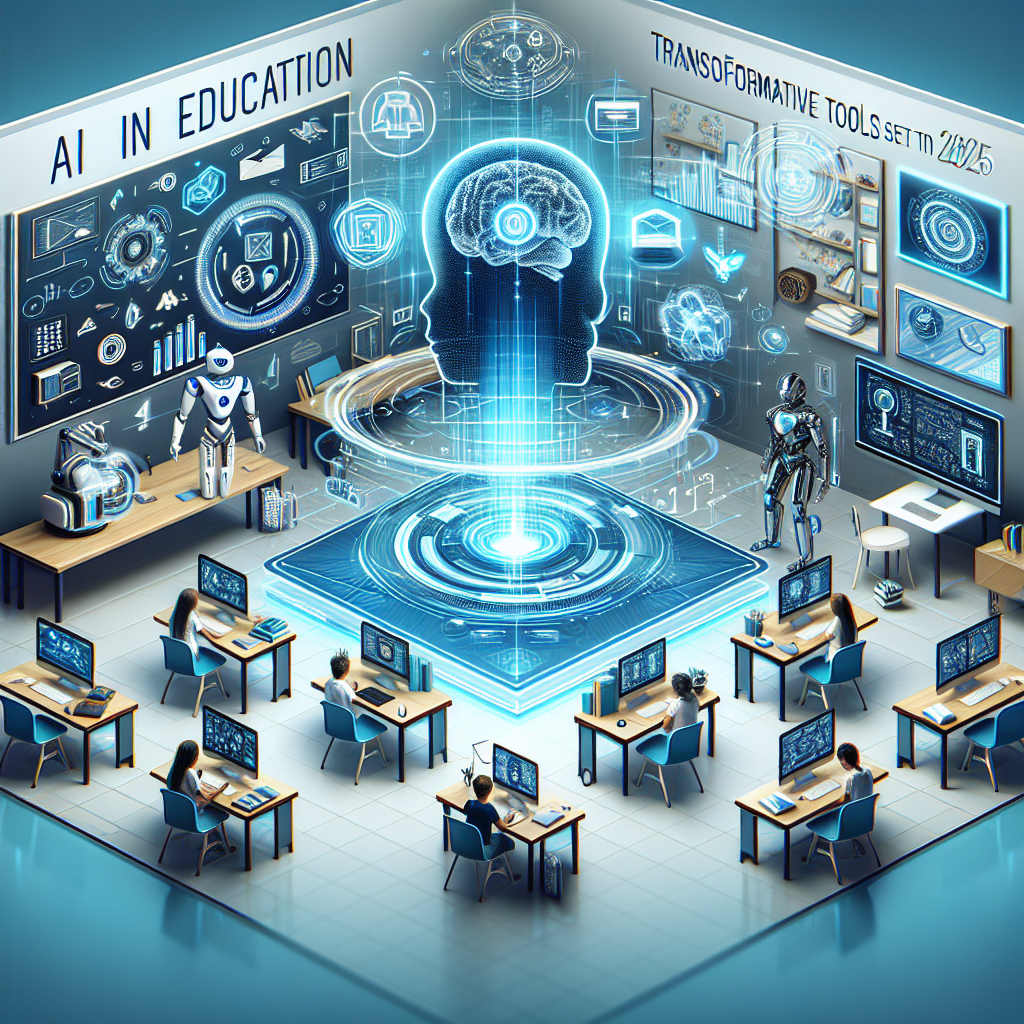
AI in Education: Transformative Tools Set to Launch in 2025
The landscape of education is evolving rapidly, with artificial intelligence (AI) poised to reshape traditional learning paradigms. As we move toward 2025, various transformative tools are set to enter classrooms, revolutionizing how students learn and teachers instruct.
Understanding AI in Education
AI in education refers to the deployment of machine learning technologies to help facilitate the learning process. These tools can personalize learning experiences, automate administrative tasks, and enhance student engagement. With predictive analytics and adaptive learning technologies, AI holds the potential to cater to individual student needs effectively.
Transformative AI Tools Set to Launch in 2025
Several promising AI tools are in the pipeline for 2025, each designed to address specific educational challenges. Below are a few notable examples:
1. AI Personalized Tutor
This tool adapitates to the learning pace and style of each student, providing custom resources and exercises based on performance. For example, if a 7th grader struggles with algebra, the AI will offer targeted practice questions and instructional videos tailored to their needs.
2. Automatic Grading Systems
Imagine being able to grade essays instantly. These systems use natural language processing to evaluate written work, focusing on parameters like grammar, structure, and argument clarity. This not only saves teachers time but also provides students with immediate feedback.
3. Learning Analytics Dashboards
These dashboards will visualize student performance data, helping educators identify trends in real time. For instance, an administrator could spot that students are struggling with geometry before grades are released, allowing for timely intervention.
Comparison of Key AI Tools
| AI Tool | Functionality | Benefits | Challenges |
|---|---|---|---|
| AI Personalized Tutor | Customizes learning resources | Improved engagement | High initial implementation cost |
| Automatic Grading Systems | Grades student essays | Instant feedback | May lack nuance in evaluation |
| Learning Analytics Dashboards | Visualizes student performance | Data-driven decision making | Requires data privacy considerations |
Key Takeaways
- AI tools are set to enhance personalization in education.
- They can significantly reduce administrative burdens on teachers.
- Real-time analytics will enable timely interventions.
- Initial costs may be high, but long-term benefits can outweigh them.
- Data privacy and ethical considerations are crucial as these tools are deployed.
Pros & Cons
Pros
- Enhanced learning experiences tailored to individual students.
- Immediate feedback for students and teachers.
- Reduction of repetitive tasks for educators.
- Improved data analysis to guide educational strategies.
Cons
- High upfront costs for schools and institutions.
- Potential challenges in maintaining data privacy.
- Dependence on technology might limit human interaction.
- Quality of AI evaluations may not always match human standards.
Use Cases for AI in Education
AI tools can be applied in various educational contexts:
Personalized Learning Platforms
These platforms adapt to student performance. For example, a student struggling with reading comprehension can be presented with tailored exercises that focus on their weak points.
In-Class Augmentation
Teachers can use AI to enhance lesson delivery. For instance, using AI-generated quizzes during lectures to gauge understanding in real time can engage students more actively.
Administrative Automation
AI can automate scheduling, enrollment, and communication tasks. By integrating AI in administration, schools can redirect resources toward improving student services.
Step-by-Step: Implementing AI Tools in Your Classroom
- Identify Needs: Assess specific educational challenges that AI can address.
- Select Tools: Research and choose the AI tools that best fit your needs.
- Train Staff: Conduct training sessions for teachers and administrative staff on how to use these tools.
- Pilot Program: Start with a small group to test the effectiveness of the AI tools.
- Gather Feedback: Regularly ask for input from students and teachers to refine the tools.
- Full Rollout: Implement the AI tools school-wide after successful evaluation.
Conclusion
AI is set to transform education dramatically by 2025. Personalized learning, automated grading, and insightful analytics will herald a new era of education, making learning more engaging and effective. Schools must consider these tools not merely as technological upgrades but as pivotal components in shaping future generations of learners.
FAQs
What are AI personalized tutors?
AI personalized tutors are tools that adapt learning materials and pace based on individual student performance, providing tailored resources to enhance learning outcomes.
How can automatic grading improve education?
Automatic grading systems enable instant feedback on assignments, freeing teachers from grading tasks and allowing them to focus more on personalized instruction.
What types of data do learning analytics dashboards use?
These dashboards typically analyze grades, attendance rates, and engagement metrics to inform educators about student performance trends.
Are there ethical concerns regarding AI in education?
Yes, ethical concerns include data privacy, bias in AI algorithms, and the potential for over-reliance on technology at the expense of human interaction.
How can educators prepare for AI tools in 2025?
Educators can prepare by staying informed about technology trends, advocating for professional development, and actively participating in pilot programs for AI tools.
For more insights and discussions on AI in education, join us at the FileDevice Forum.
