
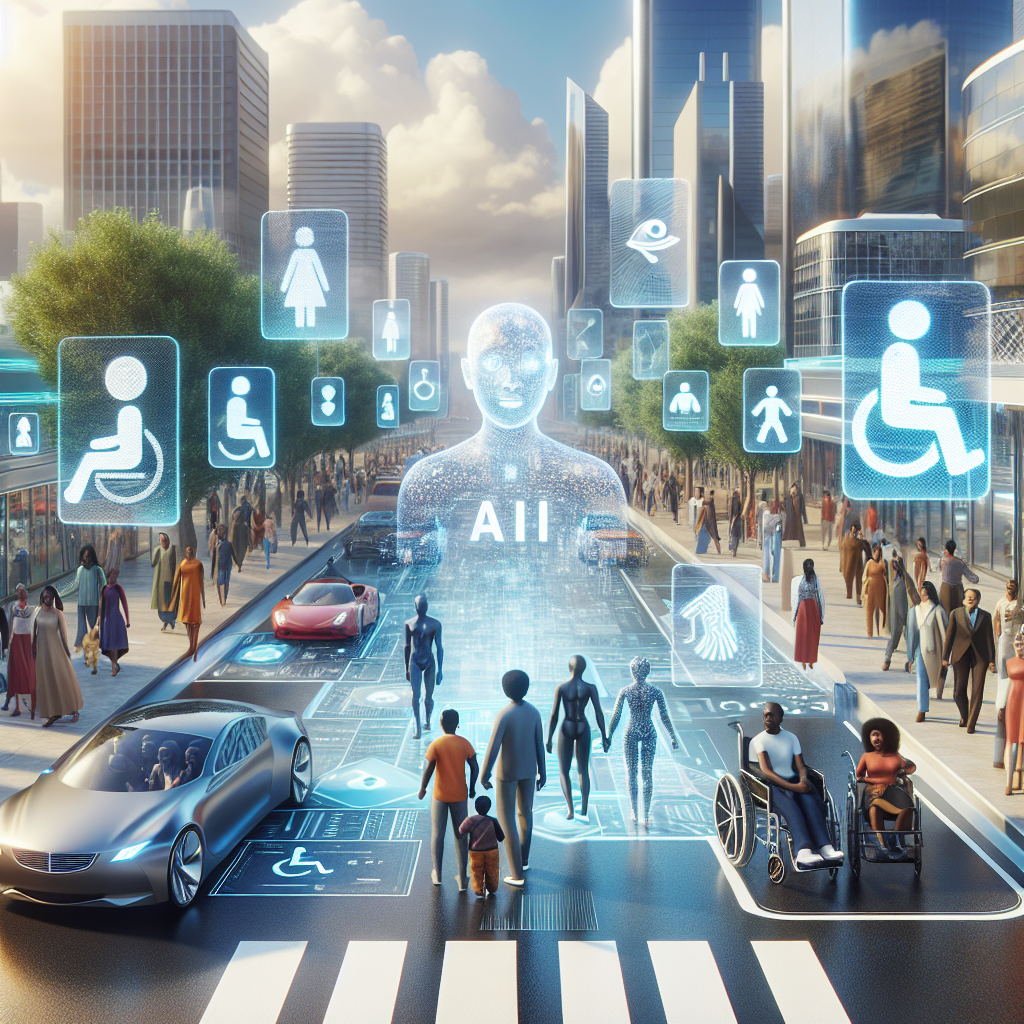
Breaking Down Barriers: How AI is Enhancing Accessibility by 2025
Artificial Intelligence (AI) is increasingly transforming the landscape of accessibility, creating opportunities for individuals who may have previously faced significant barriers. As we approach 2025, advancements in AI technology promise to redefine how disabled individuals interact with the world around them. This article explores the ways AI is enhancing accessibility, examining its benefits, potential drawbacks, and practical applications.
Understanding Accessibility Challenges
Accessibility challenges can take many forms, affecting how people engage with technology, public spaces, and information. Common barriers include:
- Physical limitations
- Sensory impairments
- Cognitive disabilities
- Lack of adaptive devices
How AI is Breaking Down Barriers
AI technologies are designed to provide solutions that encourage inclusion and equality. Here are some advancements making waves in the field:
Speech Recognition and Voice Assistants
AI-driven speech recognition technologies have drastically improved the way visually impaired individuals navigate digital environments. Systems like Google Assistant and Amazon Alexa offer hands-free control of devices, making it easier to access information.
Text-to-Speech (TTS) and Speech-to-Text (STT) Technologies
Text-to-speech and speech-to-text technologies are essential for enabling individuals with visual impairments or learning disabilities to interact with educational material. These tools have become remarkably accurate, allowing for real-time transcription of spoken words.
Predictive Text and Autocomplete
Predictive text features reduce the cognitive load on users by anticipating their writing needs and enhancing the typing speed and accuracy of those with motor disabilities.
Comparative Table of AI Accessibility Tools
| Tool | Functionality | Target User Group | Year of Launch |
|---|---|---|---|
| VoiceOver | Screen Reader | Visually Impaired | 2009 |
| Google Assistant | Voice Control | All Users | 2016 |
| Predictive Text | Autocompletion | Cognitive Disabilities | 2017 |
| Seeing AI | Image Recognition | Visually Impaired | 2017 |
Use Cases for AI Accessibility
Here are some practical examples of AI applications enhancing accessibility:
Real-Time Captioning in Meetings
Businesses are using AI to implement real-time captioning during meetings, allowing those with hearing impairments to engage fully and participate effectively.
Navigation Assistance
Apps like Aira use AI to help visually impaired users navigate public spaces by connecting them with trained agents via video feeds, providing context and direction.
Key Takeaways
- AI technologies are revolutionizing accessibility across various domains.
- Tools are becoming increasingly integrated into everyday life, benefitting a wider range of users.
- Real-time assistance features create opportunities for enhanced inclusion.
- AI continues to improve, offering better accuracy and functionality.
Pros & Cons of AI in Accessibility
Pros
- Enhances user independence
- Improves efficiency in communication
- Provides adaptive solutions for diverse needs
Cons
- Dependency on technology may increase
- Possible inaccuracies in translation or recognition
- Access to technology can still be limited by socioeconomic factors
Step-by-Step: Implementing AI Accessibility Tools
Here’s how organizations can implement AI accessibility tools:
- Assess Needs: Conduct a survey to identify the specific needs of your users.
- Select AI Tools: Choose the right combination of tools, such as TTS software and voice assistants.
- Train Staff: Provide training for staff to ensure they understand how to use the tools effectively.
- Collect Feedback: After implementation, gather feedback to understand the impact and make necessary adjustments.
Conclusion
As we look towards 2025, the role of AI in enhancing accessibility will only expand. With continuous advancements, AI technologies are not just breaking down barriers; they are creating an inclusive future that empowers all individuals regardless of their abilities. Embracing these tools can lead to a society where everyone enjoys equal opportunities in both personal and professional landscapes.
FAQs
What is AI accessibility?
AI accessibility refers to the use of artificial intelligence technologies to create products, services, and environments that are usable by individuals with disabilities.
How does AI improve communication for the disabled?
AI enhances communication through tools like speech recognition, text-to-speech, and real-time captioning, providing easier access to spoken and written content.
Are AI accessibility tools expensive?
Costs vary widely depending on the tool and its implementation, but many AI accessibility tools can be integrated at low or no cost, especially those offered by major tech companies.
Can AI fully replace human assistance?
While AI can significantly enhance accessibility, it may not fully replace human assistance, particularly in complex or sensitive situations requiring empathy and context.
What industries are most impacted by AI accessibility technologies?
Industries such as education, healthcare, and corporate environments are experiencing significant transformations due to AI accessibility technologies.
To engage with like-minded individuals and share experiences about AI and accessibility, Discuss on the FileDevice Forum.
