
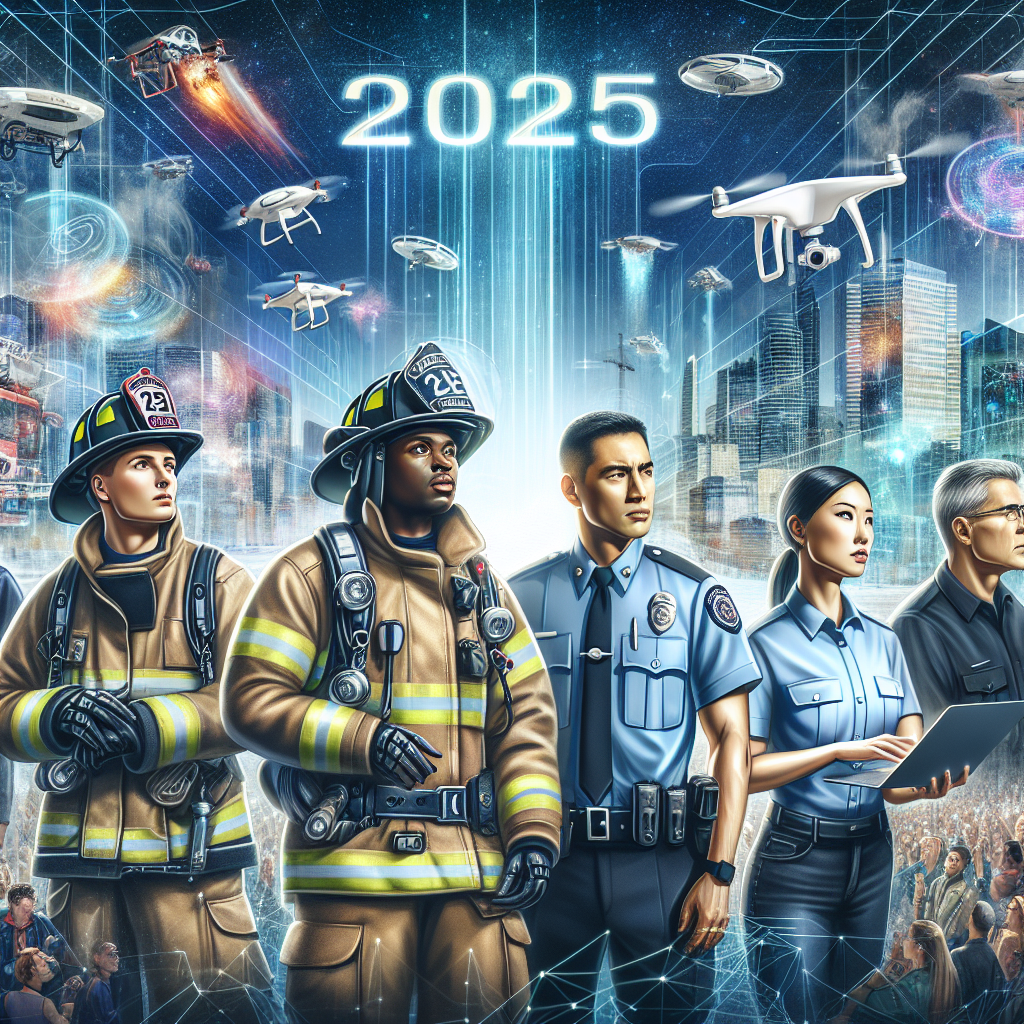
Exploring AI’s Role in Public Safety: Trends and Innovations for 2025
As technology continues to evolve, artificial intelligence (AI) is increasingly playing a crucial role in enhancing public safety. By 2025, we can expect significant trends and innovations that leverage AI to make communities safer and smarter. This article explores the various dimensions of AI’s impact on public safety, highlighting exciting developments and practical applications.
AI Trends in Public Safety
With advancements in machine learning, computer vision, and data analytics, several key trends are emerging in the realm of AI for public safety:
- Predictive Policing: Law enforcement agencies are using AI algorithms to forecast potential crime hotspots.
- Smart Surveillance Systems: Cameras equipped with AI can autonomously detect suspicious behavior.
- Emergency Response Optimization: AI assists in efficiently coordinating responses during emergencies.
Innovations for 2025
As we move closer to 2025, exciting innovations are on the horizon:
AI-Driven Communication Platforms
These platforms enable real-time interaction between public safety agencies and the community. They offer tools for reporting incidents, sharing updates, and gathering community feedback.
Autonomous Drones
Drones powered by AI are being utilized for surveillance, search and rescue missions, and disaster management. Their agility and speed make them invaluable for first responders.
Enhanced Data Analytics
With AI, agencies can analyze vast amounts of data to uncover patterns and make informed decisions for resource allocation and strategic planning.
Comparison of AI Applications in Public Safety
| Application | Benefits | Challenges |
|---|---|---|
| Predictive Policing | Reduces crime rates, allows proactivity | Concerns over biases in data |
| Smart Surveillance | Real-time monitoring, reduced response time | Privacy issues, high implementation costs |
| Emergency Response | Faster coordination, resource optimization | Reliance on data accuracy |
Key Takeaways
- AI is transforming public safety through various innovative applications.
- Predictive policing can proactively reduce crime but faces ethical concerns.
- Smart surveillance cameras enhance monitoring but raise privacy issues.
- Emergency response protocols benefit significantly from data-driven insights.
- Drones offer agility and speed in critical missions, revolutionizing traditional methods.
Pros & Cons of Using AI in Public Safety
Pros:
- Increases efficiency and resource allocation.
- Improves response times during emergencies.
- Enhances crime prevention through data analytics.
Cons:
- Potential biases in algorithms may lead to unfair targeting.
- High costs associated with setting up AI systems.
- Privacy concerns regarding surveillance activities.
Use Cases for AI in Public Safety
Numerous examples illustrate how AI is being adopted across different sectors in public safety:
1. Predictive Policing Case Study
A city in California implemented AI algorithms to analyze historical crime data. They noticed a significant drop in burglary rates by 30% within the first year.
2. Smart Cities Initiative
In Singapore, AI integrated in street cameras has successfully identified traffic violations, leading to a 25% reduction in accidents.
3. Emergency Management
Following Hurricanes, AI systems worked to analyze social media trends, allowing rescue teams to identify and prioritize distressed areas effectively.
Step-by-Step Implementation of AI Technology in Public Safety
To effectively integrate AI technology in public safety, follow these steps:
- Assess Needs: Identify specific public safety challenges in your community.
- Research Solutions: Explore different AI applications that address your identified challenges.
- Engage Stakeholders: Involve law enforcement, local government, and community members in discussions.
- Develop a Pilot Program: Start with a smaller-scale initiative to test the effectiveness of AI applications.
- Evaluate and Adapt: Analyze results and make adjustments before broader implementation.
Conclusion
AI is set to play a transformative role in shaping the landscape of public safety by 2025. As innovation continues to advance, we can expect even more sophisticated tools that will enhance law enforcement, emergency management, and community engagement. The balance between leveraging technology and addressing ethical concerns will be essential for a safe and equitable future.
FAQs
What is predictive policing?
Predictive policing uses AI algorithms to analyze data and forecast potential crime hotspots, allowing law enforcement to allocate resources more effectively.
How do AI-driven communication platforms work?
These platforms facilitate real-time communication between public safety officials and the community, improving incident reporting and feedback collection.
Are there privacy concerns with AI surveillance?
Yes, while AI surveillance can enhance safety, it raises privacy concerns regarding unauthorized monitoring of individuals.
What kind of data do AI systems rely on?
AI systems depend on historical data, social media trends, and various analytical metrics to function effectively in public safety.
Can AI replace police officers?
No, AI is intended to augment the capabilities of police officers, allowing them to focus on more critical tasks rather than solely relying on technology.
For deeper discussions and more insights on AI in public safety, Discuss on the FileDevice Forum.
