
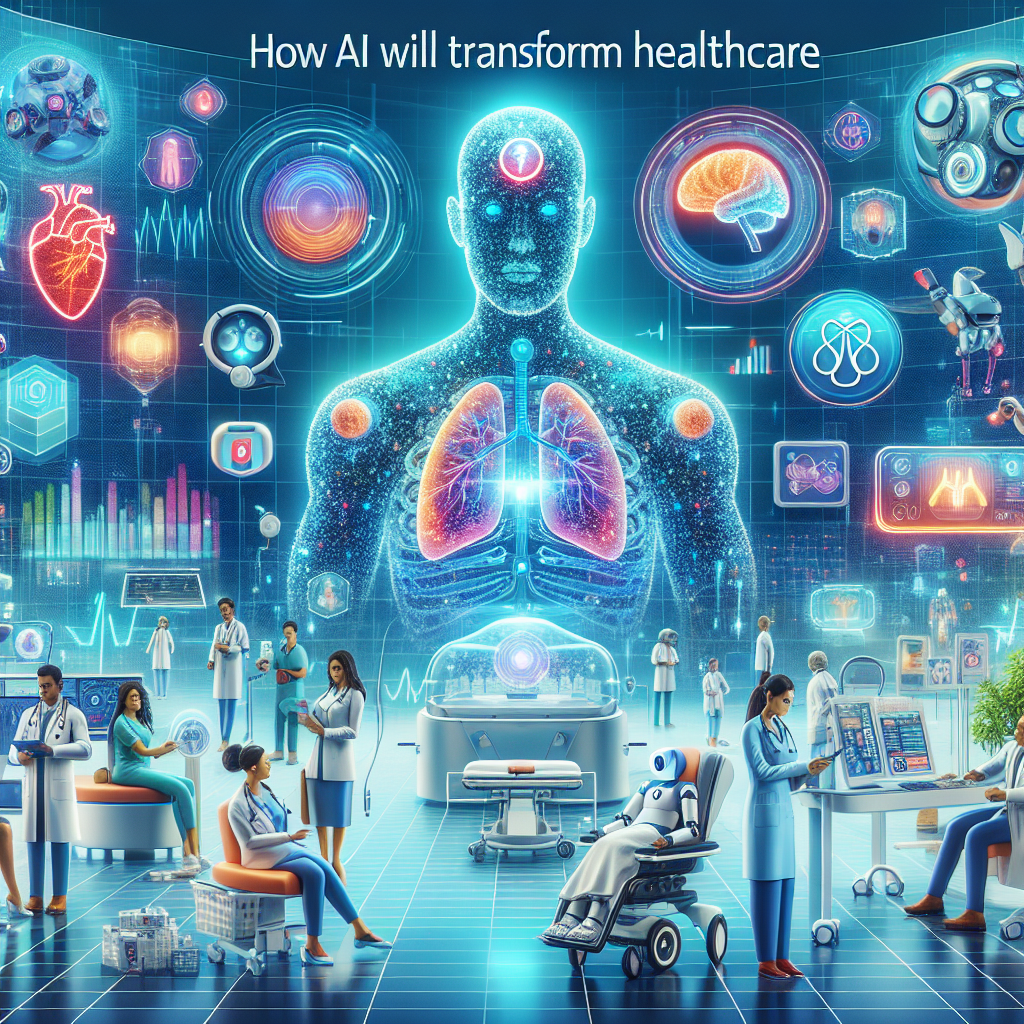
How AI Will Transform Healthcare: Innovations Coming in 2025
The intersection of artificial intelligence (AI) and healthcare is rapidly evolving, promising significant transformations by 2025. Innovations powered by AI are set to enhance patient care, streamline medical processes, and reduce costs within the healthcare industry. This article explores key advancements on the horizon and their potential impact on healthcare.
Current State of AI in Healthcare
As of now, AI is already making waves in various aspects of healthcare:
- Diagnostics: AI algorithms assist in analyzing medical images, helping radiologists identify diseases like cancer earlier.
- Predictive Analytics: Machine learning models can anticipate patient outcomes, allowing for timely interventions.
- Virtual Health Assistants: Chatbots and AI-driven solutions help manage patient inquiries, reminders, and appointment scheduling.
Innovations Predicted by 2025
Looking ahead, several key innovations are expected to revolutionize healthcare:
1. AI-Driven Personalized Medicine
Personalized medicine is gaining traction, with AI playing a vital role in tailoring treatments based on individual genetic profiles.
- Genomic Data Analysis: AI can parse vast datasets to identify suitable therapies for genetic disorders.
- Customized Drug Development: Medications will be formulated based on individual needs, minimizing side effects.
2. Advanced Robotics for Surgery
Robots equipped with AI algorithms are enhancing surgical precision, reducing recovery times for patients.
- Minimally Invasive Procedures: AI-assisted robots allow for surgeries through tiny incisions.
- Real-Time Data Integration: Surgical robots can integrate patient data and imaging in real time, improving surgical outcomes.
3. AI in Drug Discovery
AI is streamlining the complex drug discovery process, potentially reducing the time taken to bring new medications to market.
- Target Identification: Machine learning models can identify promising drug targets more efficiently than traditional methods.
- Clinical Trials: AI can help in selecting the right candidates for clinical trials, improving success rates.
4. Enhanced Telemedicine
AI will significantly improve telehealth platforms, offering more interactive and personalized consultations.
- AI Chatbots: They will assist in preliminary diagnoses during virtual visits.
- Predictive Analytics: Health professionals can predict potential health issues based on patient data gathered during virtual visits.
5. Integrated Health Monitoring Systems
The concept of continuous health monitoring thanks to AI-driven wearables will gain popularity, allowing real-time health data transmission to providers.
- Wearables: Devices will analyze vitals and alert healthcare providers when abnormalities are detected.
- Data Aggregation: AI systems will collate patient data across multiple streams (e.g., wearables, mobile apps).
Comparison of Traditional vs. AI-Enhanced Healthcare Approaches
| Aspect | Traditional Healthcare | AI-Enhanced Healthcare |
|---|---|---|
| Diagnostics Speed | Slow; often reliant on manual review | Fast; AI can analyze images and data in seconds |
| Treatment Personalization | Generic treatments based on averages | Custom treatments based on patient data |
| Cost | High due to longer processes | Potentially lower through efficiency |
| Patient Engagement | Difficult; relies on in-person visits | High; AI provides 24/7 support and interaction |
Key Takeaways
- AI will drastically improve the speed and accuracy of diagnostics.
- Personalized medicine will become the norm, minimizing adverse effects.
- Robotic surgeries will allow for more precise and faster procedures.
- Telemedicine will evolve, making healthcare more accessible.
- Continuous health monitoring will empower proactive medical management.
Pros & Cons of AI in Healthcare
Pros
- Increased diagnostic accuracy and speed.
- Personalized and evidence-based treatment plans.
- Improved patient engagement and satisfaction.
- Streamlined administrative tasks, reducing operational costs.
Cons
- Potential job displacement of healthcare professionals.
- Data privacy concerns with the utilization of sensitive health information.
- Over-reliance on algorithms might overlook unique patient needs.
- Challenges in integrating AI into existing healthcare systems.
Use Cases for AI in Healthcare
1. Early Cancer Detection
AI algorithms analyze mammograms more accurately than traditional methods, leading to early detection and higher survival rates.
2. Management of Chronic Diseases
AI-driven platforms offer personalized care management for patients with diabetes, resulting in better compliance with treatment regimens.
3. AI in Mental Health
AI chatbots provide immediate mental health support and insights, offering a supplement to traditional therapy.
Step-by-Step Implementation of AI Solutions
- Assessment: Evaluate existing healthcare processes and identify areas for AI integration.
- Partner with Experts: Collaborate with technology firms specializing in AI solutions.
- Data Collection: Gather and clean data necessary for training AI algorithms.
- Pilot Testing: Implement AI solutions in a controlled environment and assess their effectiveness.
- Scale Up: Once validated, gradually integrate AI solutions across broader systems.
Conclusion
The advancements in AI technologies are poised to transform the healthcare landscape by 2025. From personalized medicine to telehealth improvements, the potential benefits are vast. However, balancing these innovations with ethical considerations and human oversight will be crucial for ensuring that patients receive the best care possible.
FAQs
What is the role of AI in diagnostic imaging?
AI can analyze medical images faster and with higher accuracy than human professionals, assisting in early detection of diseases such as cancer.
Will AI replace healthcare professionals?
While AI can enhance certain processes, it is unlikely to replace healthcare professionals entirely. Instead, it will augment their capabilities.
How can AI improve patient engagement?
AI can provide 24/7 support through chatbots, helping patients manage their health and access information quickly.
Are there risks associated with AI in healthcare?
Yes, potential risks include data privacy issues, over-reliance on algorithms, and the challenge of integrating AI into existing systems.
What are some ethical considerations for AI in healthcare?
Ethical considerations include ensuring data privacy, maintaining human oversight, and addressing potential biases in AI algorithms.
To explore more about the future of healthcare and discuss these innovations, Discuss on the FileDevice Forum.
